Start with the dish the stock will go into
A vegetable stock does not need to taste like a finished soup. Its work is to give the next dish a background it can build on. A pot for a delicate rice dish might need a very light onion and carrot flavor. A stock for lentil soup can take some mushroom or stronger herbs. Decide on one likely use and choose the vegetables for that purpose. When the stock goes into a dish with its own onion, spices, and salt, you will be able to tell whether it belongs there.
Start with an onion, a carrot, and a celery stalk if those are available. Add a few parsley stems or a small sprig of thyme if you want a little herbal flavor. That is enough for an everyday stock. Using more vegetables will make the broth taste stronger, but adding a second and third root vegetable can also pull it in a sweeter direction than you want. Keep the first pot small so you can taste what a simple combination does.
If you want a stock with a slightly darker edge, include a few fresh mushrooms or clean mushroom stems. Their flavor travels farther than their size suggests. A mushroom stock suits grains and a skillet sauce especially well. If the broth will be used under fresh greens or a light soup, try the plain version before adding them. Once you know how strong your usual vegetables taste, you can decide whether the darker note is useful.
Prepare the vegetables for clean flavor
Wash the vegetables and trim away parts that are dirty, spoiled, or unpleasant to eat. A clean carrot end or celery leaf can go in. Scraps that have sat wet on the board, or have lost their fresh smell, are a poor starting point. A stock tastes of what goes into it. Starting with a small number of sound vegetables is more reliable than trying to find a use for every trimming.
Cut the onion into a few pieces and cut the carrot and celery into chunks about an inch or two long. Very small pieces give up their flavor quickly, but they can make the liquid harder to strain. Large pieces let you see what is in the pot and remove a particular item if you taste it taking over. A clean leek green can replace some of the onion if you split it and rinse the layers thoroughly first. Leeks can hold grit where the leaves fold together.
Keep cabbage, broccoli, and other assertive vegetables out of this first pot. They can make a broth with their own flavor, but it will not have the same range of uses. Use a small amount of garlic if the next dish suits it. An entire head will dominate a small amount of water. Place strong herbs in a piece large enough to lift out with tongs so you can stop their contribution before they become the main thing you taste.
Cook the stock at a gentle simmer
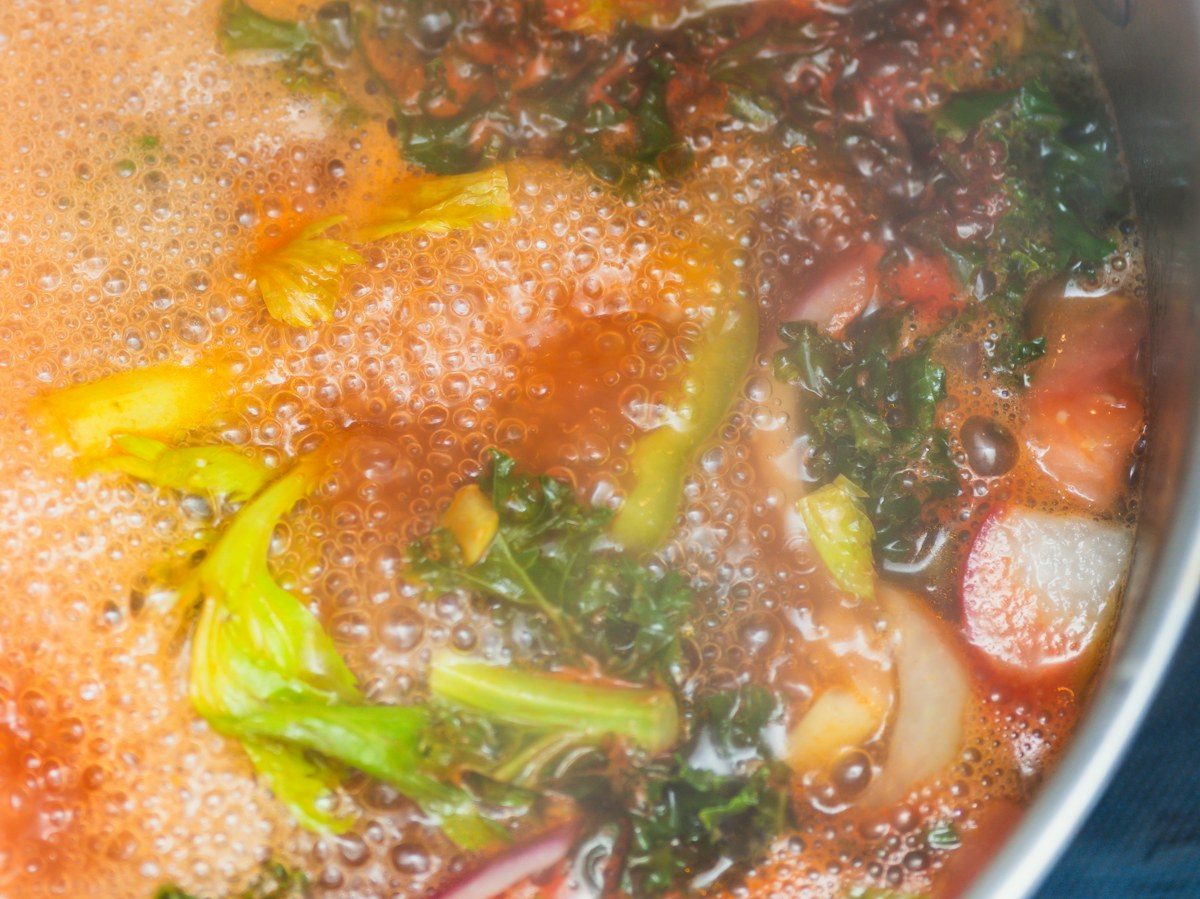
Put the prepared vegetables into a medium saucepan and add roughly four to five cups of cold water. The liquid should cover most of the pieces without filling the pan so high that it will splash when you stir. Bring the pot up to a simmer, then turn the heat down. Look for small bubbles surfacing regularly. A hard boil reduces the stock more quickly and moves fragments around the pan, making it harder to see what is happening.
Leave the lid partly open or off, depending on how quickly the water is evaporating. The total quantity will change as the pot cooks. If you need a certain amount for another recipe, check the level early and add water if you have lost much more than you intended. If you prefer a stronger stock, leave it open a little longer after the vegetables have come out. That gives you control over strength without continuing to cook the pieces.
After about twenty-five to thirty minutes at a simmer, spoon a little liquid into a cup and let it cool enough to taste. Check for a clean vegetable aroma and a recognizable onion base. If it still tastes mostly of hot water, keep simmering and taste again in ten minutes. If one herb is beginning to take over, lift it out. A modest stock can be ready well before the vegetables have fallen apart. The useful cue is the taste of the liquid, not how soft the carrot has become.
Strain it into a container you can manage safely
Take the pan off the heat and lift out the largest pieces with a slotted spoon. Set a strainer over a clean heatproof bowl, then ladle or pour the remaining liquid through it carefully. Do this on a steady, open part of the counter. A crowded sink or a bowl too narrow for the strainer makes this step more awkward than it needs to be. If the pan is heavy, ladle most of the liquid rather than trying to lift it all at once.
Decide whether the stock needs to be perfectly clear. A fine strainer can remove small pieces if you are planning a light broth. A few specks of parsley will not matter for a stew or a pot of grains. Let the vegetables drain without pressing if you want a clear liquid. Pressing can release more flavor and cloudy particles. Taste a piece of carrot after it cools. If it still tastes good, you might use it in a separate dish where the softened texture is welcome.
If the stock is going straight into a recipe, measure the amount you need. If it is for later, follow local food-safety guidance for prompt cooling and storage. Smaller clean containers make it easier to cool and portion than one very deep pot. Label the stock with the date and any notable ingredient such as mushroom or thyme. If you freeze it, use containers suitable for freezing and allow room for the liquid to expand.
Add salt where it belongs in the next dish
Keep the stock lightly salted or unsalted until you know how it will be used. A reduced pan sauce can become too salty if the liquid was heavily seasoned first. A bowl of broth served on its own may need a small amount of salt to bring out the vegetables. Taste a cup and season that cup first to see what changes. This lets you keep the rest flexible.
For a pan sauce, pour a small amount into the hot skillet after the main ingredients have been taken out. Scrape up any brown patches with a wooden spoon, then let the liquid reduce until its flavor is clear. Check for salt once you know how much sauce will remain. A squeeze of lemon or a small knob of butter can finish it. Those ingredients will taste different against a mushroom stock than against a plain one, which is one reason to label the container.
For grains, check the package for the amount of liquid you need. Replace all or part of that liquid with stock. A mild broth can make a plain grain pleasant to eat without making it taste like a fully seasoned side dish. When the grain will be dressed with herbs, cheese, or vinaigrette, leave enough room for those ingredients. Taste a spoonful before adding them. A stock that seems weak in the cup can become quite noticeable once it is absorbed into a small quantity of grain.
If you want to use the stock for a brothy bowl, warm a measured portion and add one prepared ingredient at a time. A few cooked noodles will change its balance less than a spoonful of miso or a salty cheese. Taste again after anything strongly seasoned goes in. You may find that the broth needs only chopped herbs at the table.
Use the first batch to design the second
If the broth is sweet enough to stand out, use less carrot next time or add a little more onion and celery. If it has a bitter edge, consider the herb, celery leaves, or any deeply browned ingredient. Simmer the next pot without the likely source and compare. If the flavor was right but difficult to notice in a soup, reduce the strained stock a little rather than making it from a much larger pile of vegetables. That makes a fairer comparison.
You can also soften the cut vegetables in a little oil before adding water. This gives an onion more time to mellow and can make the stock taste fuller. If you want to test that version, use the same amounts as before and stop before the pieces brown heavily. For a clear, fresh result, use the uncooked vegetables again. The stock can be prepared differently without becoming complicated.
Write down the combination and which dish benefited from it. A plain onion and carrot stock may turn out to suit more meals than a dramatic one. A mushroom version can be worth keeping in a separate container for a specific sauce. Once you have matched a few simple batches to the way you cook, you can choose the vegetables at the beginning and spend less time making adjustments after the pot is on.