Open the cupboard and plan the texture
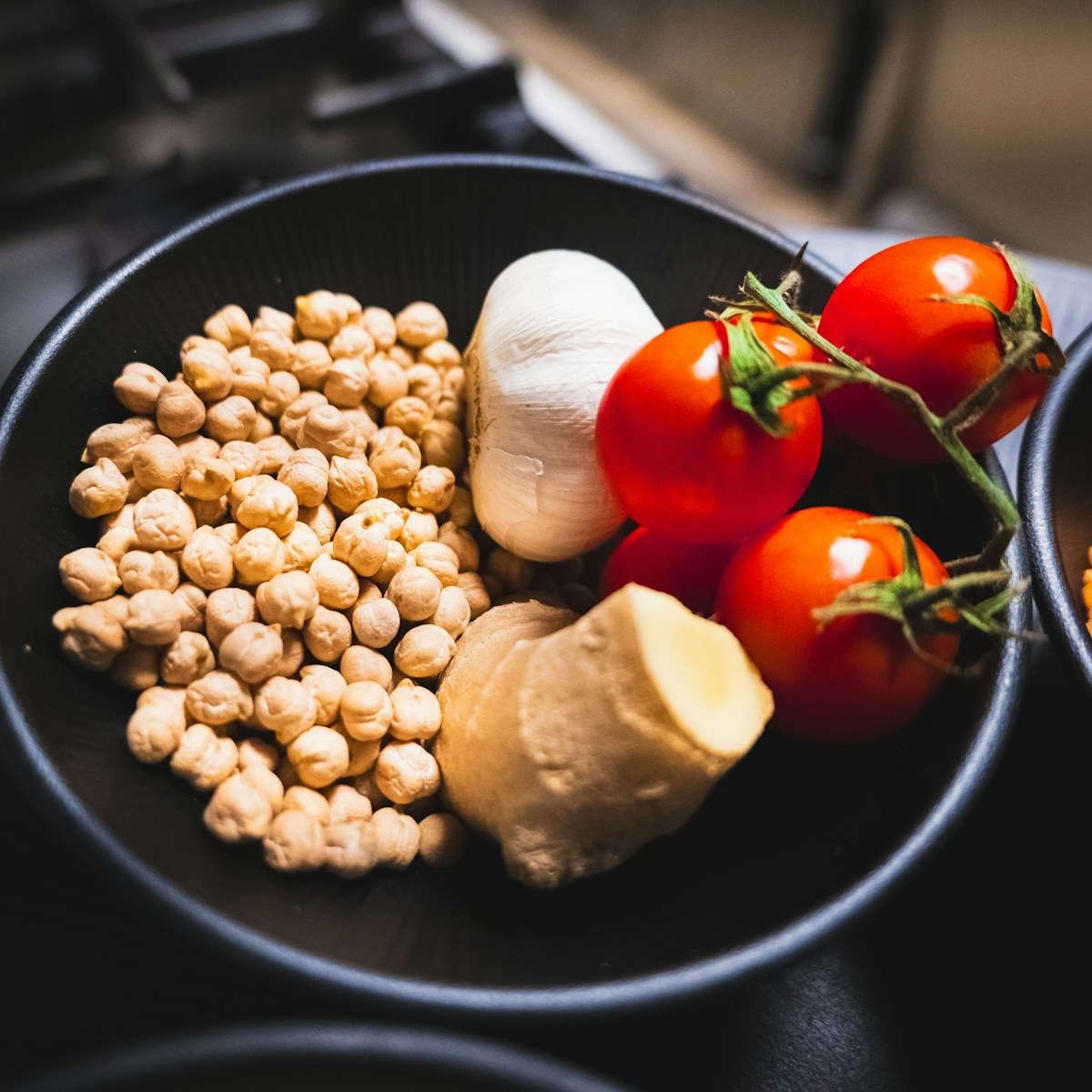
A can of chickpeas and a can of tomatoes can make a useful dinner even if there is little fresh produce in the house. The two ingredients do different things. Chickpeas hold their shape and take on some of the sauce around them. Tomatoes supply enough liquid to loosen the beans and then cook down into something you can scoop onto bread. The aim is a skillet of distinct chickpeas in a sauce that clings to a spoon.
For roughly two generous servings, start with a standard 15-ounce can of chickpeas and a 14- or 15-ounce can of tomatoes. Have a small onion, one clove of garlic, olive oil, salt, and black pepper to hand. Ground cumin and smoked or sweet paprika are useful here, but any spice you choose should have a role. Cumin adds an earthy warmth and paprika rounds out the tomato. If you would rather finish the dish with fresh basil and olive oil, leave out the paprika and let the tomatoes be the leading flavor.
Decide what will sit under the chickpeas. A bowl with couscous can hold a loose sauce. A thick slice of toast does better with a mixture that is almost the consistency of a stew. If you have no bread or grains, use a ladle of the bean mixture to mash into the sauce so the meal eats more like a bowl of hearty soup. You can make that decision near the end without changing how the onion is cooked.
Soften the onion before the tomatoes arrive
Drain and rinse the chickpeas. Look through them once for any loose bits of skin, then set the colander aside to drain. The skins can stay attached. For the tomatoes, look at the label and then at the contents. Whole peeled tomatoes will need crushing with a spoon or with clean hands in a bowl. Diced tomatoes can go in as they are. Tomato purée is already smooth, and a thick one may need a splash of water for this recipe.
Chop the onion fairly fine so it softens into the sauce. Heat a wide skillet over medium heat and add a tablespoon or so of olive oil. Stir in the onion with a pinch of salt. Let it cook until the pieces are translucent and their sharp smell has mellowed. This may take five to eight minutes depending on the pan and how much moisture the onion has. Reduce the heat if the edges start to go brown before the pieces soften. Add a spoonful of water if a dry patch starts catching.
Chop the garlic while the onion is cooking. Stir it into the softened onion and wait for its smell to reach you. Add half a teaspoon of cumin and a quarter teaspoon of paprika, and turn them through the oil briefly. A few seconds is often enough. Have the tomatoes ready to tip in as soon as the spices smell fragrant. Leaving the spices over heat while you open the can risks a burnt flavor that stays in the sauce.
Simmer until a spoon leaves a trail
Stir the tomatoes into the pan, scraping the base to release the onion and spices. Bring the mixture to a gentle simmer. Add the drained chickpeas and move them around until they are coated. Lower the heat so there are small bubbles around the pan instead of rapid splashes. Cook uncovered and stir occasionally, particularly near the end when the sauce starts to thicken.
The tomatoes will vary more than the chickpeas. Some canned diced tomatoes are packed in thin juice, while others come in a thick sauce. After about ten minutes, draw a spoon through the center of the skillet. If the sauce rushes straight back, give it more time for toast. If a line stays visible for a second before filling, it will hold nicely on bread. If the line remains bare and the chickpeas look dry, add a spoonful of water and stir until the sauce loosens.
Taste after the sauce has reduced. The chickpeas may already contain salt, and the finished sauce will need less than the liquid seemed to need at the beginning. If the texture still feels thin but the tomato is already concentrated, scoop out about a quarter of the chickpeas and press them with the back of a spoon. Stir them back in. They will thicken the liquid without cooking more moisture away. This gives a softer base while leaving plenty of whole chickpeas in the pan.
Choose one finishing direction
For a bright bowl, grate a little lemon zest over the finished skillet and squeeze in a small amount of juice off the heat. Taste a spoonful before squeezing more. Some tomatoes are quite tart on their own, and the zest can give the impression of lemon without raising the acidity much. Add chopped parsley or a handful of torn soft herbs if you have them. Put the herbs in each bowl so they keep their fresh edge.
For a deeper finish, stir in a teaspoon of tahini loosened with warm water. Add it off the heat so the sauce stays easy to stir. Tahini makes the tomato taste rounder and gives the beans a nutty note. The dish will take on a paler color. Keep a little of the loosened tahini back to drizzle on individual portions if you want some bites to taste more strongly of sesame.
For a briny finish, add chopped green olives or a few rinsed capers. Use less salt in the skillet and taste after adding them. They are effective in a bowl with a bland grain underneath, where the salty bits carry a long way. A little torn oregano or a splash of olive oil is enough to finish this version. You can keep the cumin if you like its warmth, or use black pepper and dried oregano in the onion mixture the next time you make it.
Use bread, grains, or greens according to the sauce
Toast for chickpeas should be thick enough to support a hot topping. Toast it while the sauce finishes, then rub the top lightly with the cut face of a garlic clove if you want a stronger savory edge. Spoon the chickpeas on right before eating. For a plate served at the table, keep the remaining bread on the side so everyone can make a second piece while it is still crisp.
A grain bowl has more tolerance for liquid. Put cooked couscous, bulgur, or barley in the bottom and spoon the saucier chickpeas over it. If the grain has been cooked without much seasoning, stir through a pinch of salt and a little oil before the topping goes on. You can taste one bite with the grain before adding the final lemon or olives. The base can absorb acidity and salt that seemed strong when you tasted the sauce by itself.
Fresh spinach or thinly sliced chard leaves can turn the dish into a one-skillet meal. Stir a modest handful into the sauce during the final simmer and let the leaves wilt before you decide whether the pan needs more liquid. If you want to use the stems of chard, slice them finely and cook them with the onion so they have time to soften. Keep the greens secondary to the chickpeas so the pan still has a clear texture.
Change the route when the cupboard looks different
Shallots or the white parts of scallions can take the place of onion. They soften more quickly, so keep a closer watch during the first part of cooking. A little onion powder added with the cumin can stand in if there is no fresh onion. Give it only a moment in the oil and pour in the tomatoes before it colors. The sauce will have a simpler base. A finishing herb or a small knob of butter can add some depth if the tomato tastes plain.
Canned white beans can replace chickpeas, but stir less often and use a gentler simmer. Their skins may split and the centers may soften into the sauce. That is welcome in a bowl over barley. If you want a toast topping with the beans still recognizable, keep a small portion back and stir it in near the end to warm through. This also lets you make the sauce as thick as you want without cooking all the beans for the same amount of time.
If the tomato supply is just a little paste, cook a spoonful of it with the softened onion and add water gradually to build a sauce. Start with less water than you expect to need, then use the spoon trail again. A small amount of paste can give the dish a stronger, darker tomato flavor. Balance it with olive oil or a spoonful of plain yogurt at the table. This version gives the same pantry ingredients another path without asking for a long list of substitutions.
Whatever direction you take, finish by tasting a full bite with the chickpeas, sauce, and serving base together. The sauce should leave the beans recognizable and taste balanced after it meets the bread or grain. A few drops of lemon or a final pinch of salt can do more for that bite than another long stretch on the stove.