Choose a block whose texture fits the pan
Firm or extra-firm tofu makes this dish easier to turn than soft or silken tofu. Check the label and use the preparation and storage directions on the package. Two blocks with the same description can differ in how much liquid they release. Open the package just before you prepare it and look at the shape of the block. If it is already firm enough to lift with your hand or a broad spatula, there is no need for an elaborate press.
For two small servings, start with one block of about twelve to fourteen ounces. Have a clean towel or paper towels, a wide skillet, neutral oil appropriate for the heat, and salt if you need it. For a short glaze, set out a spoonful of soy sauce or another suitable seasoning, a spoonful of water, and a little rice vinegar or lemon. A small amount of sugar is optional if you want the glaze to taste rounder. Check labels for ingredients and allergens, particularly when you are cooking for several people.
Think about the way you plan to eat the tofu. Cubes fit into a bowl with a fork. Wider slabs can sit across bread or on top of a plate of grains. Thick pieces keep a softer interior and provide more room for a browned face to contrast with it. Very thin pieces take on color quickly but can dry at the edges before you decide whether they need more cooking. Use an even cut the first time so the pan can tell you what you want to change.
Dry the surfaces without breaking the pieces
Drain the block and set it on a clean towel. Pat the top and sides. If the block is still releasing water steadily, give it a few minutes on a clean plate, then pat it again. Press gently with a towel only if it holds its shape. A heavy weight can squeeze moisture from some types of tofu, but it can also split a brittle block. For this method, the most important place to dry is the outside of the pieces that will touch the skillet.
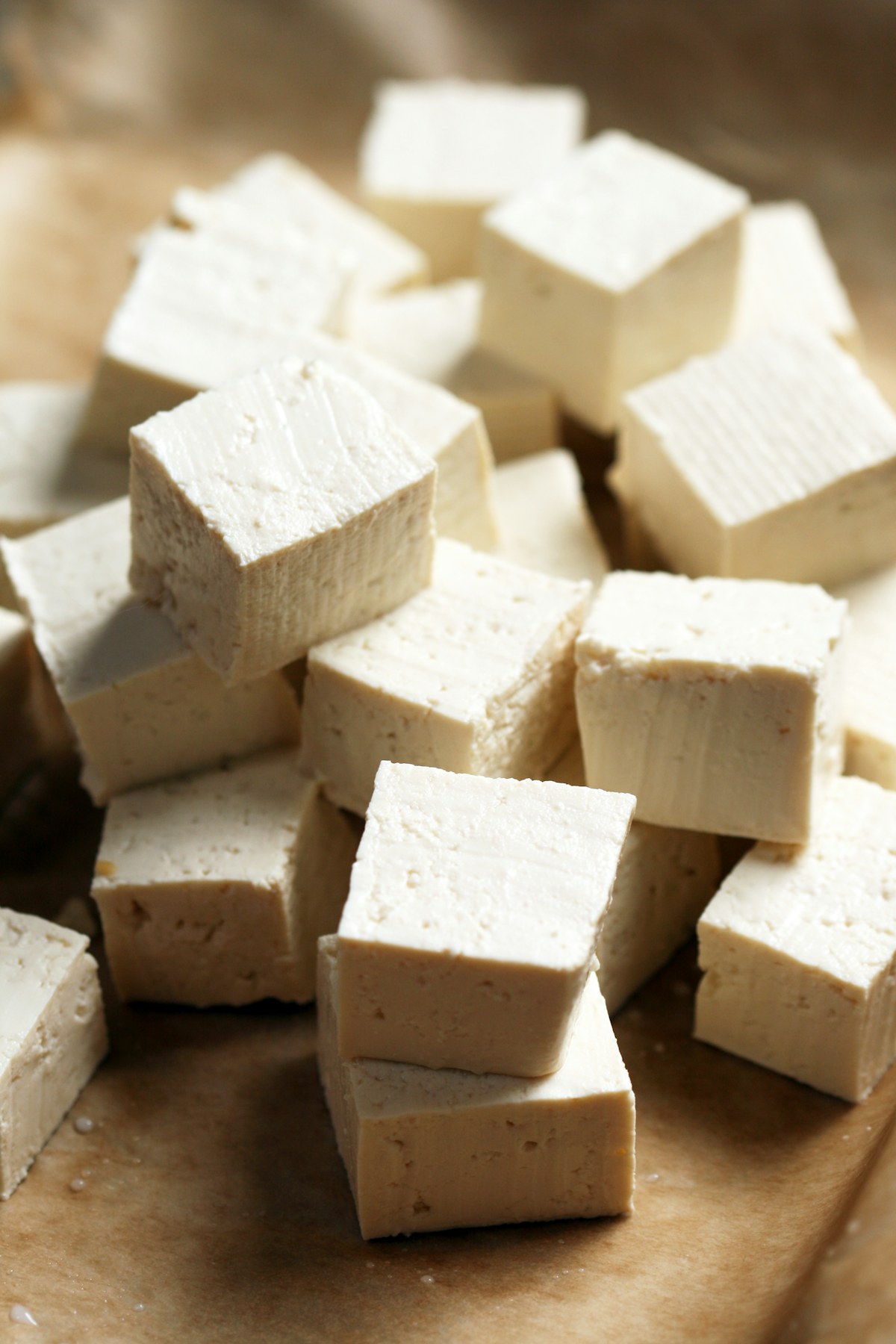
Cut the block into slabs about half an inch thick, or divide those slabs into large cubes. The easiest cubes to cook have a broad enough face to set flat and a size you can hold with tongs. Pat the fresh cut surfaces, particularly if you see droplets. Leave the pieces spaced on the towel while the skillet warms. If a couple of pieces crack, keep them separate and put them in a part of the skillet where you can remove them early.
If you want a thin crust with a slightly different texture, toss the pieces in a light dusting of cornstarch just before cooking. A small amount can cover the dry faces without turning white across the whole piece. Shake away loose starch before the tofu goes in. Excess powder can collect in the oil and turn into sticky patches when sauce is added. You can compare a few coated pieces with uncoated ones in the same pan if you keep them in separate areas.
Brown a broad side before turning
Warm the skillet over a medium to medium-high setting appropriate for the pan. Add enough oil to make a light film across the base and wait until it moves readily when the pan is tilted safely. Place the tofu pieces one at a time, setting the largest face down. A steady sizzle tells you the pan is hot enough to begin. If you can barely hear it, wait briefly before adding the rest. If the oil is smoking, remove the pan from direct heat and let it cool before continuing.
Leave room between pieces. Crowding can lower the pan temperature and make it harder for liquid to escape. The tofu should be easy to reach from at least one side with a spatula. Let the first face sit for several minutes, then lift a corner to inspect the color. If the surface is pale and clings to the metal, wait before trying to turn it. A browned face often lifts more readily once its surface is dry. Use the spatula close to the pan so you do not leave the crust behind.
Turn the pieces onto another broad side. Cubes can take several turns if you want color all around, but two good faces can be enough for a simple bowl. Keep track of the first pieces that went in, since they may finish earlier. If one side of the skillet is hotter, exchange the pale and dark pieces after turning. Put the most fragile pieces near the cooler edge or take them off once they have enough color.
For two batches, move the first one to a plate before loading the second. Give the pan a moment to return to temperature, and check whether it still has enough oil to coat the surface evenly.
Mix the glaze in a cup before it goes into the skillet
Stir together a spoonful of soy sauce, a spoonful of water, a few drops of rice vinegar, and a small pinch of sugar if you want it. Taste a drop. If the soy sauce is quite salty, use more water and less seasoning in the first glaze. A sweet mixture can thicken quickly against a hot pan, so it is useful to begin with a little more water than you think the tofu needs and reduce it briefly. A dry browned face can handle a short coating without losing all its texture.
Turn down the heat when the tofu is browned. Pour in part of the glaze around the pieces, rather than directly onto the driest faces. Turn the pieces once or twice while the liquid bubbles. Stop when the glaze leaves a light coat and there is little liquid underneath. If it thickens too quickly, add a small spoonful of water off the strongest heat and move the pan gently. Watch for small patches getting dark near the edges. A glaze only needs time to reach the tofu, and it can go from shiny to sticky while you are getting a serving bowl.
For a crispier result, take the tofu out and cook the sauce by itself for a short time. Spoon it into a bowl beside the tofu or drizzle a little across the center of each piece. This keeps more of the crust dry. The same choice is useful when the dish is going to wait briefly. A cooked glaze has less time to soften the tofu if the two only meet on the plate.
If you want garlic or ginger in the glaze, add a little finely chopped aromatic to the pan only after the tofu has browned. Move the tofu aside briefly and stir the aromatic in a clean part of the skillet over reduced heat. Pour in the liquid as soon as it smells fragrant. If the pan is already very dark, use a clean small pan for the glaze instead. This lets you taste the aromatic without picking up scorched crumbs from the tofu.
Give the browned pieces somewhere they can stay in shape
Serve the tofu over cooked rice or another grain and place the glazed faces where you can see them. Add crisp vegetables that suit the seasoning. Thin cucumber slices or a small pile of shredded cabbage can provide a fresh bite. Put strongly dressed vegetables beside the tofu rather than below it if you want the browned face to stay dry. A spoonful of glaze on the grain can carry flavor without soaking the entire plate.
For a sandwich, use slabs instead of cubes and cut the browned slab to fit the bread. A large piece of tofu can slip if it is covered in loose liquid. Give the glaze time to settle before closing the sandwich. Add a thin crunchy layer or a thick spread rather than stacking several wet toppings. If the tofu is mildly seasoned, add a little acid to the vegetable instead of cooking another glaze.
Taste the first forkful with the base and the tofu together. If the glaze seems strong on its own but fits the rice, leave it. If the middle tastes very plain, cut the next slab thinner or add a little seasoning after cooking. A flavorful sauce can reach the surface quickly. It does not need to be boiled into the tofu for a long time, and doing so will make it harder to keep the outside browned.
Use the texture to choose the next adjustment
If the tofu stayed pale, inspect the cut surfaces before you change the seasoning. Wet pieces, a crowded skillet, or a pan that never reached a steady sizzle can all slow browning. If the tofu was crisp but dry inside, cut it a little thicker or brown fewer faces next time. If it stuck firmly, leave the first side longer or choose a pan whose cooking surface suits the preparation.
Write down the brand or firmness, the cut, and whether you used starch. Try one change at a time. When a broader face browned easily and the center stayed pleasant, repeat that part even if you want a new sauce. The two decisions are separate. Get the tofu you want from the skillet, then use the glaze to make it fit the meal.