Look at the bunch before reaching for the knife
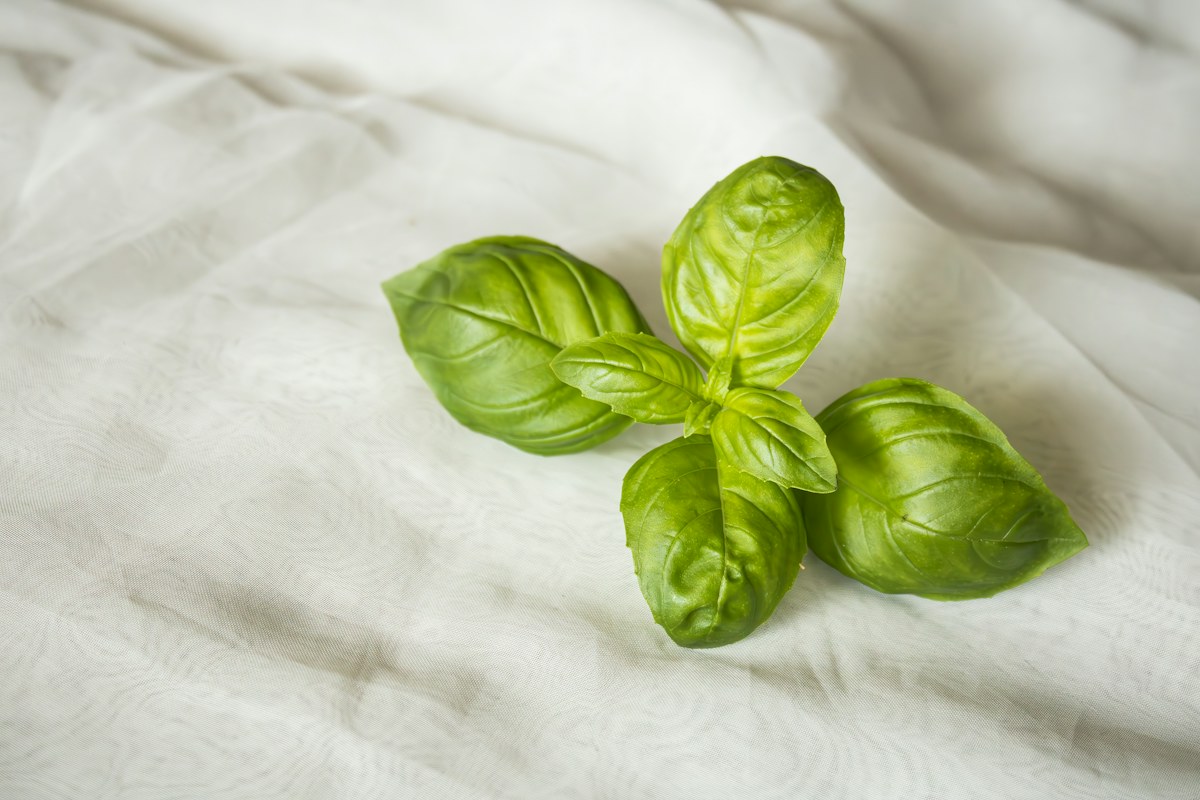
A bunch of fresh basil may have large leaves that are easy to tear and small leaves that can go straight onto a plate. Some leaves will be tender, while others have a stronger center rib. Lay the bunch out and smell one leaf as you break it. The useful difference is how strong it tastes and how it feels to eat. A large leaf can give a sauce plenty of flavor even if you would not want to find it whole in a sandwich.
Choose basil with sound leaves and a smell you enjoy. Different types can have distinct aromas, so look at the name when it is available and taste a small piece before using a large amount. Plan to use the most delicate leaves first. Keep the bunch according to the seller's or package guidance if you are not cooking immediately. Avoid leaving it in a wet shopping bag, where the leaves can get crushed and hard to inspect.
For a first comparison, set aside a few leaves to tear, a few to cut, and a slightly larger one to steep in a warm dish. Gather a plate of sliced tomatoes, plain cooked grains, or a piece of bread with a mild topping. Use the same base for more than one sample if you want to see how much the preparation changes the flavor. Add salt and oil after tasting the leaves themselves, so they do not cover the first comparison.
Wash and dry the leaves you will use
Handle the basil on a clean surface and wash the leaves as appropriate under running water. Remove any spoiled pieces. Shake off excess water and pat the leaves gently on a clean towel. Dry leaves are easier to cut and will not add as much loose liquid to a plate of tomatoes. A leaf pressed tightly into the towel can bruise. Let it lie flat, press lightly, and lift it rather than rubbing it across the surface.
Strip the tender leaves from the stems and place them into groups according to size. Leave a few small leaves whole for serving. A larger leaf can be cut in half along the rib if it feels too thick. Use the tender part in a chopped preparation and set aside a tough stem. Some stems have a strong smell and can go into a cooked sauce briefly, but they are easier to remove when left in one piece.
Work with only as many leaves as you plan to use. Basil that has already been torn or cut can darken more quickly than an intact leaf. Keep the remaining bunch suitable for storage and choose more as needed. Put the cut leaves near the plate they will finish. A small pile on the board can get mixed into another ingredient before you have a chance to taste it.
Tear leaves for bites where basil stays distinct
Tear a leaf into pieces about the size you want on a fork. Use larger pieces for a plate where they can be seen and picked up. Use smaller pieces when the basil will sit inside a sandwich or next to a small piece of cheese. Tear just before serving and place the pieces where they touch the food lightly. A whole leaf in one bite can taste much stronger than two small pieces shared across several bites.
For tomatoes, set a torn piece beside a slice and taste together. Some tomatoes are sweet enough that basil and a little salt are all the plate needs. Others may benefit from a drop of oil or vinegar. Add it to a test slice before dressing the whole plate. If the basil is very strong, tear a leaf in smaller pieces and distribute them with gaps. This gives you a chance to taste both a plain tomato and one with basil.
On a warm plate, torn leaves can soften quickly. Add them after cooking when you want their shape and fragrance to remain visible. A little residual warmth can release their smell. If they darken immediately, let the food cool slightly before adding the rest. Use a small whole leaf as a garnish when its texture is tender enough to eat. Save the larger pieces for a cut or steeped preparation rather than using them only as decoration.
A simple sandwich can show the difference between a whole leaf and a torn one. Put a small leaf between two thin pieces of a mild filling and make a second bite with the same amount torn into three or four pieces. The whole leaf may slide when you bite. The smaller pieces can stay where you put them and give a little basil to each mouthful. Use the shape that suits the filling and how you plan to eat it.
Cut leaves when they need to reach more of the dish
Stack two or three dry leaves and roll them loosely. Use a clean sharp knife to slice across the roll into thin ribbons. Unroll them gently with your fingers or a fork. Avoid crushing them into a tight wad. A broad knife and a few clean cuts give you ribbons with less wet bruising. Cut only the portion you are ready to use. The ribbon shape can spread easily through a grain or a small bowl of dressing.
For a finely chopped version, cut ribbons first and then cut across them. Stir a small amount into a spoonful of oil or plain yogurt and taste. The chopped basil will reach more of the mixture than torn pieces would. Add it in small increments. A dressing for many vegetables can use enough to make the herb noticeable on a single bite, while a small spoon sauce can be overwhelmed very quickly. Make a fresh small amount and follow appropriate handling for any perishable mixture.
Use the ribbons when you want the leaves to remain visible. Put them on top of a bowl of beans or toss them through lightly just before serving. Use finely chopped leaves when you want one even taste in a small portion of sauce. If you find that the knife makes the basil seem stronger, use fewer leaves rather than assuming the same amount should work in both forms. The amount of exposed surface affects the first bite as much as the size of the handful.
Steep a whole leaf when you want the flavor without pieces
A leaf or tender stem can also go briefly into a warm cooked sauce or broth. Put in one whole piece that you can remove with a spoon. Let it sit while the dish is warm and taste a small cooled sample after a short interval. Take the leaf out when the flavor is clear enough. If the sauce is already strong, the basil may be a quiet background. Use a few fresh pieces at the table only if you want more of its fresh scent.
For a light tomato sauce, soften the tomatoes first and let a leaf steep near the end. Compare the sauce before and after. A long simmer will change the smell and can make the leaf harder to see. If you want more basil, use another leaf and taste again instead of leaving the first one in until you forget it. Remove any tough stem before serving. A leaf that was pleasant to smell can still have an unpleasant texture after sitting in liquid.
Steeping works best when the herb can be tasted against a simple base. Try it in a small cup of warm light stock if you are curious about a particular bunch. Put a torn fresh leaf in a second cup at serving time. One may have a softer flavor and the other a stronger smell at the first sip. Choose the one that fits the meal. A dish can also use both stages if you want a gentle base and a few fresh bites on top.
If you are using basil with another herb, taste them apart before combining them. A little parsley may give you more green color without repeating the same smell. Mint can make the mix more pronounced. Start with one piece of each in a spoonful of the prepared food. Add the better combination to one portion and keep the remaining servings plain until you know which finish people prefer.
If you served the same dish warm and cool, note which temperature made the aroma clearer.
Save the comparison that will help next time
Notice which preparation made the basil easiest to taste without covering the food. A small leaf torn over tomato may be better than a spoonful stirred into the whole plate. A few ribbons in a grain bowl may give more even flavor than one large leaf. Keep a brief note about the type and the cut if you buy the same basil regularly. If the next bunch tastes stronger, use less and keep the preferred texture.
When you have only a few leaves left, give them a clear purpose. Use the best small leaves on a warm plate, chop a larger one into a fresh spoonful of dressing, or steep a clean piece in sauce and remove it before eating. The method that makes the leaf easy to notice will make the last of the bunch useful without adding another strong ingredient.