Start with the grind on the bag
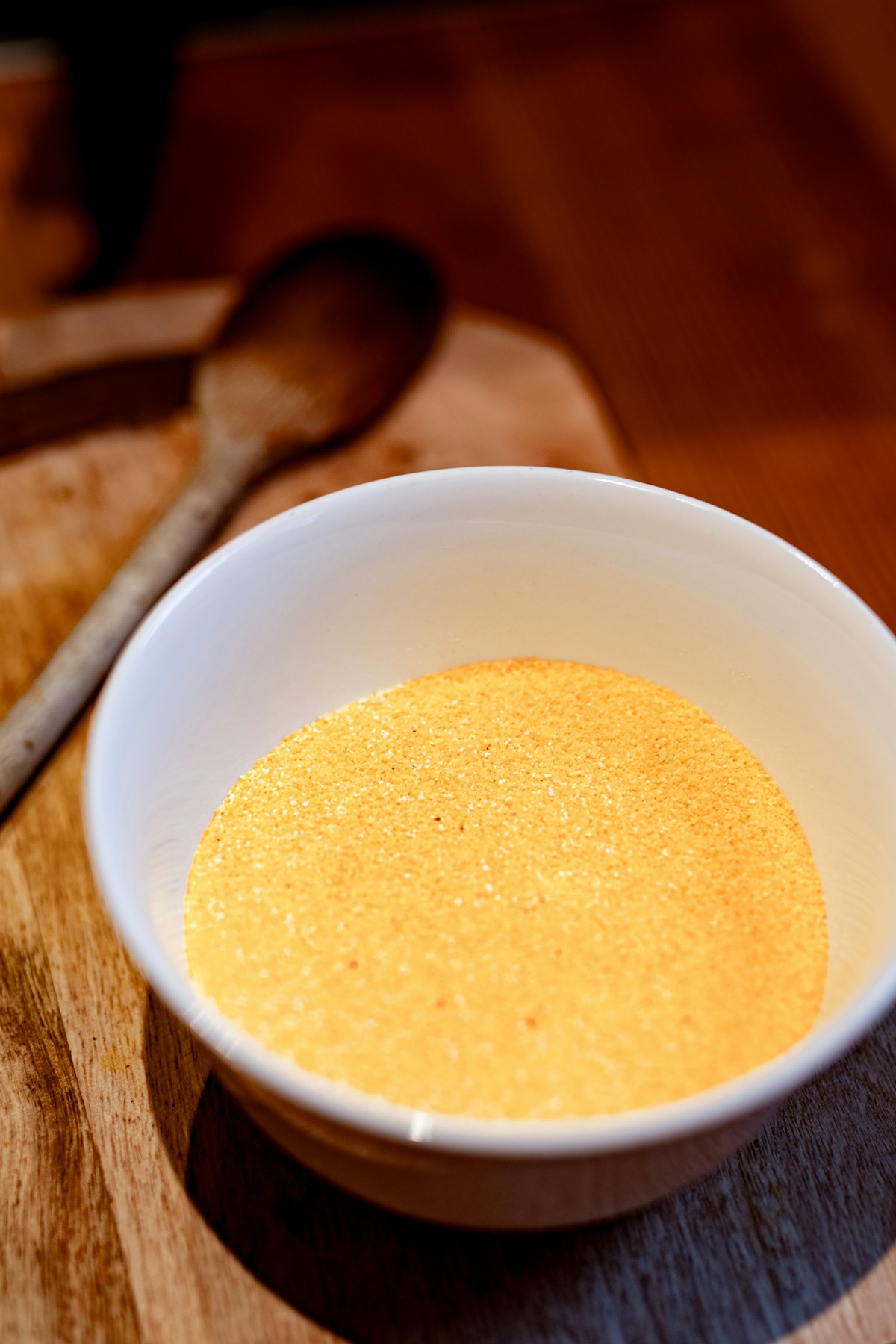
A bag marked polenta may contain coarse cornmeal meant for a long cook or a quicker product that thickens within a few minutes. Look at the directions before you choose a pot or set dinner time. The size of the grains affects both texture and timing. Coarse grains can leave a clear bite after they have softened. A fine product can become smooth sooner and may need a different quantity of liquid. Use the package ratio for a first batch, then compare its result with what you wanted.
For soft polenta under a saucy main dish, choose enough liquid for a bowl that can be spooned. For polenta that will be chilled and cut, use a preparation intended to set. Give the batch one purpose at the start. You can chill leftovers from a soft bowl if they hold together, but a large amount of extra liquid can keep the pieces too fragile to lift. Have a shallow container ready if you already know some of the polenta should cool into a slab.
Water is a sensible starting liquid because it lets you taste the corn clearly. Light stock can work if its salt and flavor suit the topping. Keep the seasoning modest until the end if you plan to add cheese. Measure the dry cornmeal and liquid before turning on the heat. It is harder to add a measured handful in a steady stream while opening the bag and trying to keep the first spoonful from sticking.
Look at the ingredient list as well as the timing. Some quick polenta is partly cooked before packaging. A prepared tube is already cooked and is usually intended for slicing or warming. Coarse cornmeal sold without a polenta label may still be suitable if its directions give a method for cooking it in water. Choosing a dry product for a spoonable bowl avoids trying to turn an already firm slab back into the texture you want.
Add the cornmeal gradually
Use a saucepan with room above the liquid, since bubbles can rise and burst as the mixture thickens. Follow the package method for the product you have. When it calls for adding cornmeal to hot liquid, start with a steady simmer and pour the meal in a thin stream while whisking. Add the next part only while the first is moving freely. A large dump of dry cornmeal can wet on the outside and stay dry inside a lump.
Whisk around the edge and across the base as you pour. Once the meal has dispersed and the mixture starts to thicken, change to a wooden spoon or heat-safe spatula if that is easier to move. Scrape across the bottom and the corners of the pan. A heavy-bottomed pan can be helpful, but it still needs attention at the beginning. If you feel a patch sticking, reduce the heat and move it gently before the color changes.
If a few small lumps remain, press them against the side while the mixture is still loose enough to stir. Add a little warm water only if the polenta has become too thick to work. A larger lump may be easier to lift out than to break up without overworking the rest. Look at a spoonful to see whether a hard speck is an uncooked cluster or simply a coarser grain. The grains should become tender together as the mixture cooks.
Keep the heat gentle while the grains soften
Once the pot starts to bubble, turn the heat down. A quiet simmer with occasional bubbles is easier to manage than a vigorous boil. Stand back enough to keep your hands clear of splashes and use a utensil with a handle that reaches the bottom comfortably. Stir often enough to prevent sticking and follow the package timing. Polenta can look thick before the grains have finished cooking, so do not use thickness by itself as the signal to stop.
Taste a small amount after it has cooled enough. A coarse grind may retain a pleasant texture, but it should not feel gritty or hard at the center. If the grains need more time and the mixture is already very thick, stir in warm water in small amounts. Let each addition blend in before judging again. Cold liquid can slow the simmer. Use enough warm liquid to keep the pot workable and give the grains time to finish.
If the polenta has reached the right texture but tastes bland, try a pinch of salt in a separate spoonful before seasoning the whole pot. A few grated shavings of a flavorful cheese can change both saltiness and texture. Add butter if you want a softer, richer finish. The amount needed depends on what will go on top. A deep mushroom sauce can sit well on polenta that tastes primarily of corn. A bowl served on its own may need more seasoning from the start.
Set the texture just before serving
For a bowl, aim for polenta that settles gently after you spoon it onto a plate. Draw a spoon across the bottom of the pot. A trail that fills slowly can give a soft mound with enough body to hold a topping. If the mixture stays rigid and pulls away in one piece, stir in a little warm water. If it runs like a thin soup, give it another brief simmer while stirring. Stop just before it reaches the exact consistency you want because it will thicken a little as it cools.
Warm the serving bowl if that is convenient. A cold bowl can set the outside of a small serving before you have started eating. Put the topping across one part of the polenta so that the corn can be tasted by itself. A spoonful of cooked beans, a few browned mushrooms, or a lightly dressed pile of greens can all work. A liquid topping can loosen the part it touches, so begin with less sauce when the polenta is already quite soft.
If dinner needs to wait briefly, keep the pot safely warm as appropriate and stir before serving. A skin can form at the surface while the polenta sits. Scrape gently and add a little warm liquid if you need to bring it back together. Avoid repeated long holding if it would make the texture less useful. The mixture is easiest to adjust when the rest of the meal is already prepared.
For a lunch that depends on a spoonful of greens and a little oil, let the polenta be fairly soft and leave a small hollow in the center of the bowl. The topping can sit in that hollow without needing a thick base. If the topping is a stew with a loose broth, give the polenta enough body to hold its edge. Test a serving by spooning a little of the stew alongside first, then decide how much to mix at the table.
Cool a portion when you want pieces for another meal
Spoon the portion you want to cut into a shallow container prepared for the method you are using. Smooth it with a spatula so most pieces will have the same thickness. Leave enough room at the edge to lift the slab later. Cool and store promptly according to suitable food-safety guidance. A shallow layer is also easier to divide. Once it is firm, use a sharp knife to cut it into rectangles or wedges that fit your pan.
For a crisp side, pat the outside dry if there is visible moisture and warm a suitable skillet with a little oil. Place the pieces flat and leave space to turn them. Wait for a browned face before trying to move one. A thin spatula can lift the crust without breaking it. If the slab was very soft, use wider pieces and turn them gently. A softer portion can still be warmed and served in a bowl if it does not cut well.
Taste a piece after the first face is browned. The outside may be all the contrast you need, especially if it will sit next to a salad. A second browned face gives a firmer piece for toast-like toppings. Put sauce on the side if you want both faces to stay crisp. A little salt or grated cheese at the table can make the corn easier to taste without requiring another round of cooking.
Record what the grind needed
Note the amount of liquid and the time when the grains became tender. Record the brand or grind if you will buy it again. The cooked texture depends on those details more than on a recipe title. If you change from a coarse grind to a quick product, read its directions and begin again with a small batch. A spoonful tasted in the middle of cooking gives you a clearer guide than trying to apply the same timing to both products.
Look at what remained after serving. If every bowl was easy to spoon and the topping stayed in place, keep that ratio for the next soft batch. If you wanted firmer pieces the next day, reserve a separate portion and prepare it for slicing rather than trying to make one bowl do two opposite jobs. Once you can recognize the tender grain and the consistency you need, choose the final texture for the dish you plan to eat.