Choose a potato by the center you want
A roast potato can have a firm center that slices cleanly or a fluffy center that breaks into the crisp shell when you press it. Pick a floury potato if you want the second result. Labels for common varieties vary by region, so look for one sold for baking, mashing, or roasting, or ask which local variety is likely to break down a little when cooked. A waxy potato can still roast well, but it will usually stay denser at the center. Choose one type for the first batch so you can judge it on its own.
For a small tray, start with about a pound and a half of potatoes, neutral cooking oil or another oil appropriate for the heat, and salt. You will need a saucepan, a colander, and a sturdy metal baking sheet. Pick a tray that leaves space around the pieces. The larger amount of cut surface will help them brown only if that surface can lose steam and make contact with the tray.
Decide whether to keep the skins. Thin skins can taste good and offer another kind of edge. If the skins are thick or you want roughened surfaces all over, peel the potatoes. Cut into reasonably even chunks, around an inch and a half across at the thickest point. A few flatter pieces are fine. Check the largest one against the smallest so you can see whether one is likely to cook twice as quickly. Cut any particularly big piece again.
Simmer only until the edges are ready to roughen
Put the chunks in a saucepan and cover them with cold water. Add a moderate pinch of salt. Bring the water to a boil, then reduce it to a controlled simmer. Keep the pieces submerged without letting them knock around the pot. As they cook, the outside will soften before the middle. You want a knife to enter the surface easily and still meet resistance inside. Start checking before the pieces feel soft enough to mash.
Lift a chunk out and drag a fork along its edge. If the fork leaves a faint rough line and the chunk still holds together, the surface is close to ready. If the outside stays smooth and feels hard, give the pot another minute and test again. If a few smaller pieces are already beginning to break, drain the batch before the largest ones soften fully. A cut surface that has begun to crumble can produce a good crust as long as the chunks survive being moved.
Drain the potatoes carefully and leave them in the colander briefly until the visible steam eases. Set them back in the dry pan and shake once or twice. The surface should become slightly furry or broken where pieces rub. Stop if the chunks are coming apart. You can use the broken bits too. Give them a place where they can be checked early, since their extra edges will take on color faster than the larger pieces.
Coat the pieces without soaking them
Heat the oven to 425°F or about 220°C. Put a rack in a position where the tray can receive steady heat. A lower-middle rack is a good starting point for a browned underside. Add a few tablespoons of oil to the drained potatoes and turn them carefully to coat. Start with enough to make the rough surfaces shine lightly. If oil collects in the bottom of the pot, lift the pieces out rather than tipping all the oil onto one part of the tray.
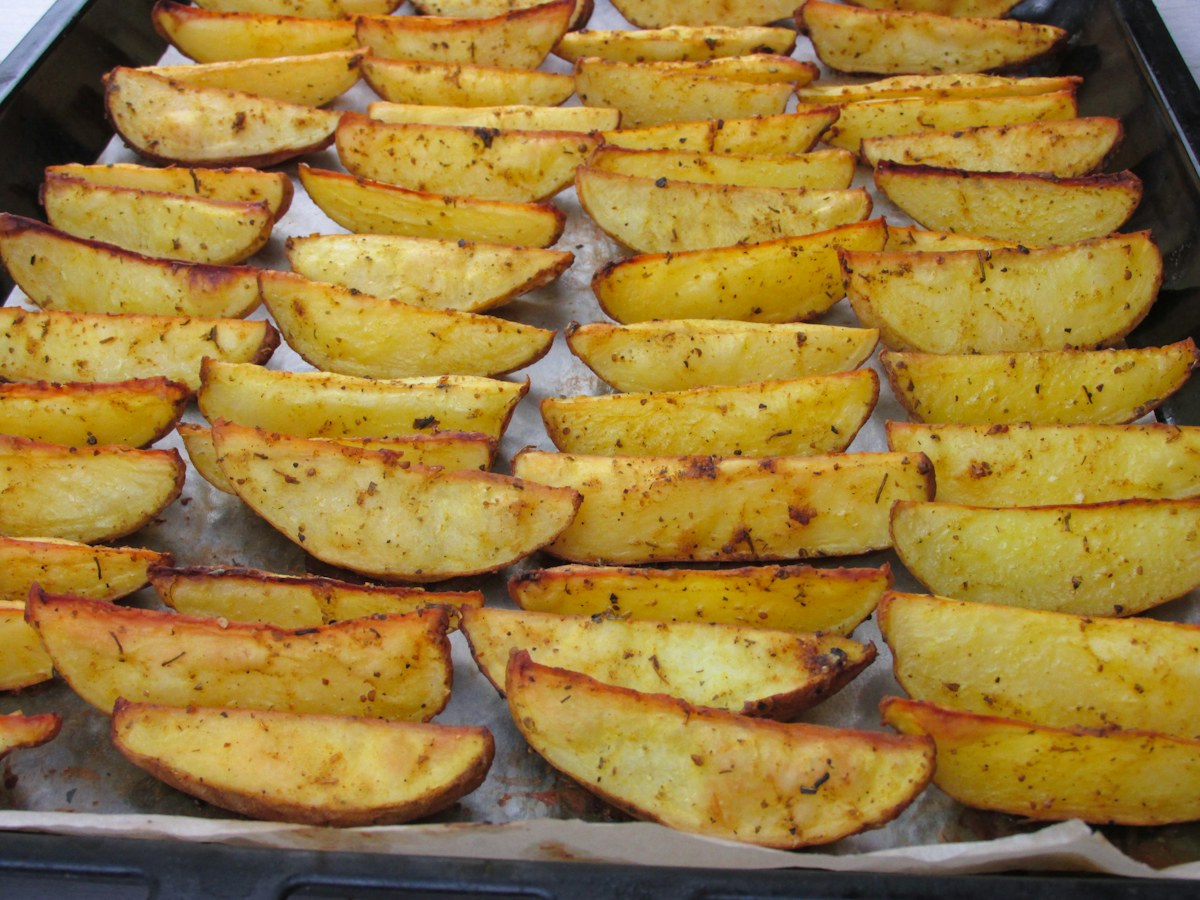
Place the potatoes with broad cut faces down and leave a little space around them. That first side can develop a noticeable crust if it stays in place. Look at the corners and the middle of the tray. If the center is crowded, move some pieces outward or use a second sheet. A crowded tray can look convenient at first and require more work later when all the potatoes need turning before they are ready to release.
If you want garlic or fresh herbs, save them for later. Finely chopped garlic can darken while the potato centers are still cooking. A whole herb sprig can withstand longer heat, but loose leaves may dry out and scatter. Season the hot finished potatoes with chopped herbs or add an oil-coated sprig toward the end of cooking. Keep the first tray simple enough that you can tell when the crust itself is done.
Turn the potatoes once they have enough color to hold together
Roast for around twenty minutes before the first close check, adjusting for your oven. Use a thin spatula to lift one piece from the edge and one from the center. If they are pale or stick firmly, leave them a little longer. If the crust is well browned, turn them onto another flat side. A piece that releases easily is less likely to leave its entire first crust on the pan. Work gently around the smaller ones.
After turning, give them enough time to brown the second side and cook the center. Begin checking again after about ten to fifteen minutes. A finished chunk should give easily when pierced, and the shell should look dry and golden. Use the smallest finished piece as a taste test. If the center is ready but one side is pale, move that piece to a bare part of the tray for another few minutes. If the outside is already quite dark, move the tray away from the strongest heat and let the middles finish.
An oven may have a hotter corner. Rotate the tray when you turn the potatoes if several pieces in one area have developed a stronger color. You can also pull out the fully cooked pieces while the others finish. This is useful when the tray contains a mixture of small broken pieces and large chunks. Take out the small crisp bits first so you can serve them as part of the dish instead of scraping them off later.
Read the texture after the first bite
Let a potato sit briefly before tasting. A crunchy outside with a soft center tells you the timing was close. If the outside is hard rather than crisp and the center feels dry, check whether the potatoes cooked too long at strong heat or whether the variety was drier than you expected. A waxy center that stayed pleasantly firm can be useful for another meal. If you wanted fluff, choose a different potato for the next tray rather than trying to force the texture with more roasting time.
If the crust is pale and the pieces are already soft, look at the underside first. A little color there means some of the tray worked. Spread the potatoes out earlier next time and leave the first side alone longer. If they were wet after draining, give them more time to release steam before adding oil. If they were dry but barely had a film of oil, coat them a little more thoroughly without leaving a pool at the bottom.
Season while the potatoes are still warm. Fine salt spreads evenly over the surface. A few flakes give a separate crunch if you want to notice them. Chopped parsley or chives are useful when the rest of the meal is rich. Add a small amount and taste before using more. A sauce such as yogurt with lemon works beside the potatoes, where it leaves their browned sides exposed until they reach the fork.
Keep the crust available until serving
Put the potatoes on a warm serving plate in a loose layer if they are going directly to the table. A deep pile will trap steam under the top pieces. If dinner is delayed briefly, leave them spread on the tray rather than covering them. Check again before serving. The browned surface can soften if it sits for long enough next to something wet.
For a second meal, cut a remaining potato into smaller pieces and warm it on a tray or in a suitable skillet. Follow safe cooling and storage guidance for any cooked leftovers. The texture will be different from the original large chunk. Its browned pieces can make a useful addition to a plate of greens, beans, or a cooked egg. Keep extra sauces aside until the potato has reheated so that the freshly exposed edges have time to dry.
Record the variety and the stage at which you drained the pieces. Those two details will tell you whether to change the starting ingredient or the simmer next time. A shallow fork mark and a little resistance at the center give you a repeatable place to stop. From there, the oven can do the work of setting the crust.
If you are bringing the potatoes to a shared meal, ask whether there will be a free place in the oven to heat them shortly before dinner. Pack the sauce and any herbs separately. The crust will soften if the potatoes are wrapped tightly while steaming, but a brief reheat spread across a hot tray can bring back some of its texture. Leave the smallest pieces near the cooler edge of the tray and check them first. A few pieces may already be crisp enough without staying in for the full time.