Set aside three cloves from the same bulb
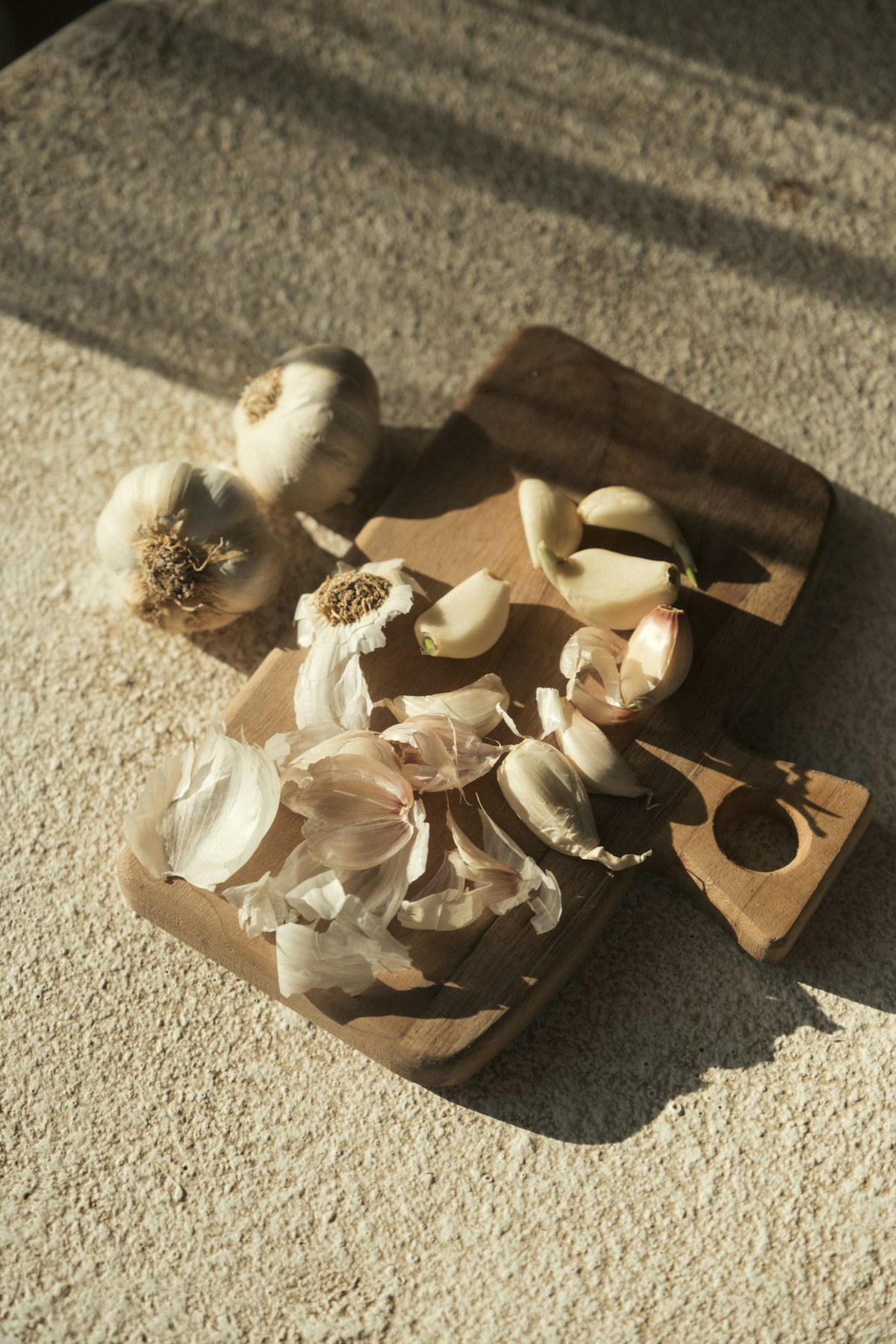
A raw clove can give a dressing an immediate bite. A sliced clove cooked gently in oil can make a pan smell savory without tasting as sharp. A roasted clove can be pressed into a soft spread. Start with three similarly sized sound cloves from one bulb and prepare one each way. They will not behave exactly alike, but using the same bulb makes the differences in the preparation easier to recognize. You need only a little of each for the first taste.
Choose a firm bulb with cloves that feel solid. A loose outer skin is normal. Discard cloves that are spoiled or badly damaged. Put the cloves on a clean board and separate them with your hands. Use a sharp knife for slicing and a fine grater or suitable tool for the raw portion. Have a little olive oil, plain yogurt or another mild base, and a piece of bread ready for tasting. A fresh clove can be strong, so make the tasting portions smaller than you think you will need.
Decide where each version might go before preparing it. A raw version could be used to make a cold spoon sauce. Slices can become part of a warm grain or cooked vegetable. Roasted garlic fits a spread where the smooth texture is useful. Keep the test amounts separate until you have tasted them. If they all go into the same bowl, you will learn only that the combined dish tastes of garlic.
Grate a little raw garlic into a small test portion
Peel one clove and cut away the hard root end. Hold it securely and grate only part of it with a suitable tool, keeping fingertips clear of the blade. You can also chop it finely on a steady board. Raw garlic chopped or grated into small pieces spreads quickly. Mix a pinch into a spoonful of a mild base such as plain yogurt. Give it a moment to blend and taste on a small piece of bread or vegetable. A very small quantity can give a clear result in a spoonful.
If it is sharper than you want, add more of the base rather than increasing every other seasoning. A little salt or lemon can help a bland sauce, but neither will necessarily make a large amount of raw garlic taste less strong. Test a few drops of lemon separately if the sauce needs it. The garlic should make the first bite interesting and leave enough room to taste what it is served with. If you want a gentler raw finish, cut a fresh clove and rub a small part of the surface lightly across toast rather than adding grated garlic to every serving.
Prepare only the quantity you are ready to eat. Do not store a homemade garlic-in-oil mixture at room temperature. Follow a tested food-safety method if you intend to store garlic in oil. For this comparison, make and use each small mixture right away. Keep perishable bases such as yogurt chilled as appropriate until you use them. A clean spoon for each version will let you taste them separately without transferring the strongest sample into the mildest one.
Soften slices in a pan before they turn dark
Peel the second clove and slice it into thin pieces of roughly even thickness. Set a small skillet over low to medium-low heat appropriate for the pan, and add a little oil. Put the slices in when the oil can move freely but is not smoking. Watch the thinnest ones first. A clove can go from pale to brown quickly in a small amount of fat. For a mild result, stir until the slices soften and smell fragrant, then stop while they are still mostly pale.
Move the skillet off the heat before deciding whether to give the garlic more time. A small pan will keep cooking for a short while even after the burner is off. If a slice has a faint gold edge and smells good, take it out and cool it enough to taste. If the slices have already become dark and smell harsh, discard them rather than stirring the taste through the rest of the dish. The best moment to stop is often when the aroma changes, before most of the surface changes color.
For a vegetable dish, give garlic a short stage late in cooking. Move the vegetables aside and soften the slices on a small patch of pan over gentler heat, then stir everything together. If the pan is hot enough to scorch thin pieces immediately, use a lower setting or add the garlic in a fresh small skillet. The slices can flavor a serving even when they stay visible. Taste one with the cooked vegetable before adding several to every portion.
For a grain dish, put a few softened slices through one serving and keep the rest plain. Add a spoonful of cooking liquid only if the pieces need help spreading through the grain. A browned vegetable may already have enough flavor beside it. Taste the grain and vegetable together. If the garlic seems strong enough in that first bite, give the other servings only a few slices. The rest of the clove can be used in another part of the meal.
Roast enough to make a soft spread
Roasting a whole head is more practical than putting a single peeled clove into a large oven. Use the remaining bulb if there are enough cloves attached, or roast a new head and compare one clove from it. Trim just enough from the top to expose the tips. Leave the skins around the sides so the cloves hold together. Put it into a suitable small oven dish and brush the exposed parts lightly with oil. Cover the dish as appropriate, keeping any foil clear of heating elements.
Heat the oven to around 400°F or 200°C and roast until the cloves can be pressed easily. Begin checking a small bulb after about thirty minutes. The time depends on the size and how well the head is covered. If the top is drying while the centers remain firm, cover it again and give it more time. The strongest cue is a soft clove that yields without a hard middle. Let the bulb cool enough to handle before squeezing one clove onto a plate.
Press a small amount of roasted garlic into a piece of bread or a spoonful of a mild base. It should spread easily and taste rounder than the raw sample. If the exposed top has a very dark taste, squeeze out the softer part underneath and leave the browned edge behind. Add a pinch of salt only after tasting. The soft flesh may be enough to season a serving with no additional fat.
Compare the same bites in a useful order
Taste the roasted sample first if it is mildest, then the gently softened slice, then the raw version. Take a sip of water between them. Use a similar piece of bread or another plain food for each. The strongest raw sample can stay in your mouth long enough to make the next bite seem quieter. Reversing the order on a second round can show whether that is happening.
Notice whether the difference is mainly in the first smell or in the finish. A slice cooked gently may smell strong and taste softer once eaten. A roasted clove may be easiest to taste after you press it across warm bread. The raw one may be noticeable immediately and remain sharp. Use those observations to choose a place in the meal. A sauce that only needs brightness can take a little raw garlic, while a soft bean spread can use the roast version as part of its texture.
If you like two preparations in the same dish, keep one of them in a small finishing portion. For example, soften slices with vegetables and try a dot of the raw sauce on one bite. Or use roasted garlic in a spread and serve the fresh condiment on the side. This keeps the two flavors easy to identify. It also gives other people at the table an easy way to choose how much they want.
A mild roast garlic spread can be kept separate from the sharper sauce when you set the meal out. Use clean serving spoons for each.
Repeat the stage you liked without making more than you need
Write down the part that worked. A raw sauce may need less than half a clove. The cooked slices may need only a brief warm pan rather than a long sauté. The roasted head may need to be checked earlier if it is small. You can repeat the useful stage with another bulb even if the next clove is bigger. Use your first taste as the starting point for quantity rather than treating all cloves as equal.
If you have cooked garlic left, follow suitable food-safety guidance for prompt cooling and storage, and use a tested method for any preparation that will be kept in oil. It is often easiest to roast only what the meal will use or to plan a separate dish for the rest. The next time you reach for garlic, picture whether you want a bite, a savory background, or a soft spread. Choose the way to cook it before deciding how many cloves to peel.