Choose fillets by thickness before you choose the pan
Two pieces of salmon can weigh the same and cook very differently. A long tail section may be thin nearly all the way across. A piece cut near the center can have a thick middle and one narrow edge. If you want both pieces ready at about the same time, choose fillets with similar thickness at the center. Skin-on pieces give you a surface you can crisp and a little protection while heat moves into the flesh. Ask for a piece with the scales removed if you are buying it from a counter.
For two portions, start with two skin-on fillets of about five to six ounces each. Have a teaspoon or two of neutral cooking oil available, along with fine salt and a lemon to serve. Bring out a skillet that leaves a gap between the pieces and a thin spatula you can slide under the skin. A seasoned cast iron or suitable heavy stainless steel pan can work well. A nonstick skillet can be useful if you follow its heat and utensil directions. A crowded small pan makes it hard to slide a spatula in and easier for moisture to collect around the fillets.
If starting with frozen salmon, plan for refrigerator thawing, as recommended by the FDA. Follow the package directions, including any instructions to remove fish from vacuum packaging before thawing. Use a tray or other container to catch liquid, and keep the raw fish apart from food that is ready to eat. A piece still frozen in the middle may look dry on the outside and cook unevenly in the skillet. Patting down that surface cannot make its interior thaw. Give it time in the refrigerator before setting up the pan.
Dry the skin and set the rest of dinner aside
Blot the top and skin with clean paper towels just before cooking. Check the folds near the edges, where liquid can remain after a broad pat across the center. A dry-looking skin will still give off moisture as it heats, but getting rid of surface water helps the pan stay hot and reduces sputtering. Dispose of the towels and wash your hands. Keep a separate clean plate and utensil ready for the cooked fish. Any board, counter or equipment that touched the raw fillets should be cleaned before it is used for something you plan to eat as it is.
Season both sides lightly just before the fish goes into the pan. A pinch spread evenly across the skin is easier to control than a pile sitting in one place. The lemon belongs at the table or on the flesh after cooking if you want the skin to remain crisp. Its juice adds liquid, which you have just spent time removing from the skin. If your other dishes need dressing or cutting, finish those before turning on the heat. It is easier to watch the first few minutes of the fish when you are not also looking for a knife or clearing room for a serving plate.
Make sure your thermometer is ready. You want to be able to read the center of the thickest part without having to lift the fillet and hold it upright over a hot pan. An instant-read thermometer inserted from the side can reach the center more easily than one pushed straight down through a relatively thin fillet. Leave a clear edge of the skillet for that movement. The thermometer gives you a way to separate the question of skin browning from the question of whether the center is done.
Let the skin start flat and give it time to release
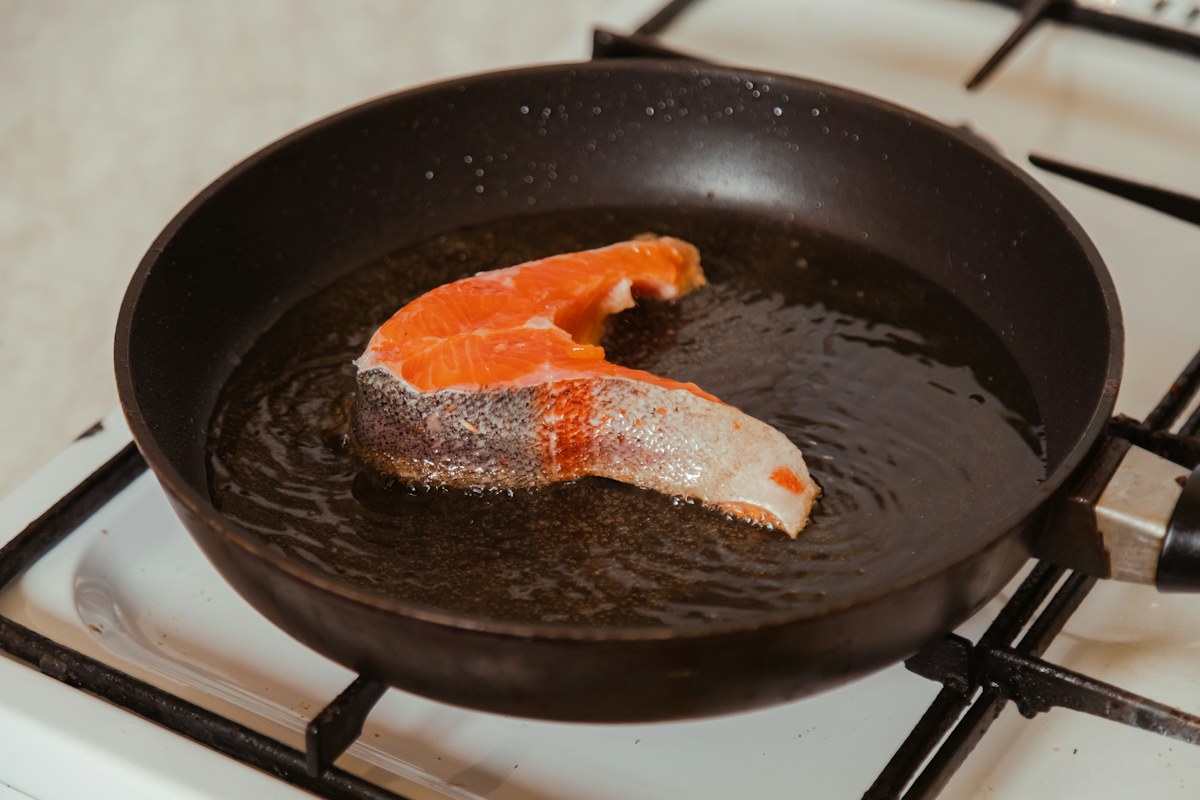
Heat the skillet over medium to medium-high heat, within the pan maker's instructions. Add a thin film of oil. When it moves readily across the pan and looks slightly shimmering, set the fish down with the skin against the skillet. Lower the nearest edge first and ease the rest away from you to reduce splatter. The fish should sizzle steadily. If the oil begins smoking heavily, pull the pan off the heat briefly and lower the setting before proceeding.
The skin may draw up at the edges in the first few seconds. Use the spatula to hold the fillet flat gently just long enough for it to settle. Move to the next piece if you are cooking two. There is no need to keep pressing once the fish stays in contact. Let the pan do the work. The skin can grip the surface early in cooking and release more readily once it has browned. Trying to pry it off too soon can leave a section behind.
Watch the edge of the flesh as it becomes opaque from the bottom upward. That change tells you where heat has reached, and the sound from the skillet tells you whether the oil is still sizzling. Neither gives you a reliable final temperature on its own. Give the first side most of the cooking time if the skin is browning evenly. If the fish is coloring quickly while the visible cooked layer remains shallow, lower the heat and let it continue gently. A blistered dark skin is difficult to undo after the center is ready.
Flip when the skin is firm enough to lift
Slide the thin edge of the spatula beneath one corner. If the skin still holds strongly, wait a little longer and try again. A piece that is ready to turn often feels firm along the bottom and lifts without much force. Check more than one edge. One section may loosen while another stays stuck. Ease the spatula under the full fillet and turn it away from you. Keep the fish close to the pan as it turns so you can place it down without splashing hot oil.
Give the flesh side time to cook, then measure the center of each piece. FoodSafety.gov gives 145°F (63°C) as the safe minimum internal temperature for salmon. Insert the probe into the middle of the thickest part and avoid touching the skillet. If you have two pieces that differ in size, check them individually. Remove each to the clean serving plate once it reaches the target. A thin piece can come out while the thicker one stays in the pan. Cooking both for the same number of minutes can leave one dry or the other below the target.
A very thick piece may need more time at moderate heat after the turn. Keep the heat low enough that the flesh surface can brown gently while the center cooks. If the outside is already dark, move the pan off the hottest burner for a moment and lower the heat before continuing. Use the thermometer to decide when the fish is ready. Turning the heat higher just before the end can color the outside without resolving what is happening in the middle.
Keep the crisp surface away from steam and sauce
Set the finished fish skin side up if you want the crisp surface to stay exposed. A flat plate works for a single portion. If you have several pieces, leave some room between them rather than stacking them. Avoid sealing a hot fillet under a tight cover for serving. Steam can soften the skin in the time it takes to finish the table. Have the rest of the meal ready so you can serve the fish promptly.
Add a wedge of lemon, a spoonful of warm lentils or a salad beside the fillet. If you have a sauce, spoon it beside or beneath the fish so each bite can take as much as it needs. A pool poured across the top changes the skin texture quickly. It may still taste good, but you lose the contrast the pan was able to give you. If someone prefers to remove the skin, a well-cooked surface should still make it easy to lift it away from the flesh at the table.
Refrigerate any leftovers promptly in a clean container. FDA guidance limits the time seafood spends out of refrigeration to two hours, or one hour above 90°F. You can portion out what will be served and refrigerate the rest sooner. Keep raw fish and its utensils separate from the cooked portions throughout cleanup. Crisp skin is best right out of the skillet. Leftover cooked salmon can be used where a crisp exterior is less important, such as flaked into a chilled salad that stays refrigerated until serving.
Change one thing before the next batch
If the skin was pale and flexible, check whether you dried it well, whether the pan was hot enough at the start and whether there was room for the moisture to escape. Try one adjustment next time. If the skin was crisp but the thickest piece took too long to finish, use more evenly sized portions or lower the heat after the first side takes color. Keep the thermometer and the same safe finish. Changing the color of the skin does not change the temperature the fish needs to reach.
If the skin stuck badly, look at when you tried to lift it. Give a new piece time to brown in a thin film of oil and use a spatula that can reach beneath it. If the skin curls and leaves a pale strip along one side, hold the next fillet flat for the first short moment. Compare the result at the same pan setting. A useful batch is one you can turn without tearing and serve before the surface softens, with each portion checked at its thickest point.