Start with the plate you intend to make
The perfect fried egg depends on what is underneath it. On a piece of toast, a crisp edge gives a little resistance before the white becomes tender. On a plate of tender greens, a softer egg can feel more at home. In a breakfast sandwich, a yolk that breaks into the bread may be exactly what you want, or it may be one more thing to manage while you carry the sandwich to the table. Decide what you want from the egg before heating the pan. The same skillet can produce several textures.
For a first comparison, fry one egg at a time. You can judge the sound of the fat, watch the edges, and see where the white is spreading. With several eggs, the whites can meet before you have a chance to observe the first one. If you are making more than two later, plan a second batch or a larger skillet. It is easier to cook them evenly if they have distinct areas rather than sharing one sheet of white.
Use a fresh egg with an intact shell and a small bowl for cracking it. Tap the shell against a flat surface and open it into the bowl. If a fragment falls in, use a clean spoon to lift it out. The bowl also lets you ease the egg into the skillet close to the surface. Dropping it from higher up can break the yolk or splash hot fat. Have the plate ready before you start, because the egg continues cooking as long as it sits in the pan.
Use the fat to judge how hot the pan is
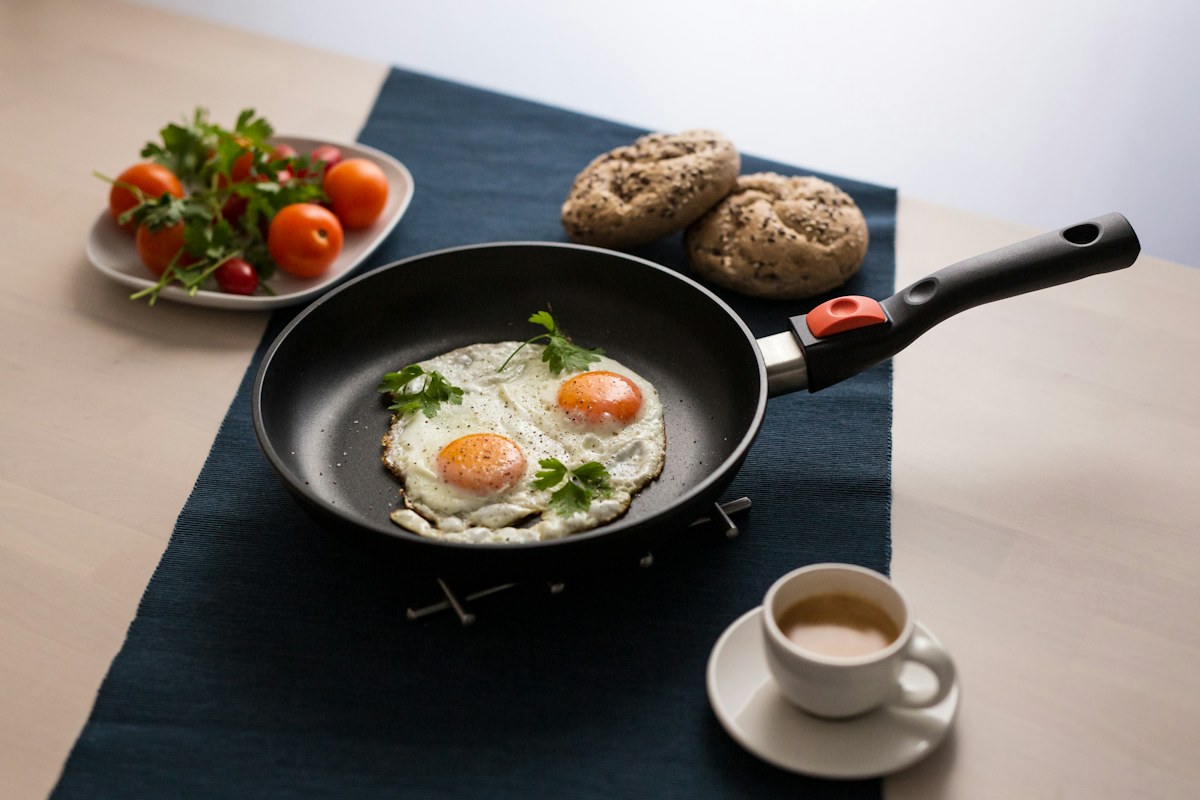
Pick a small skillet with a reasonably flat bottom. A well-seasoned skillet or one with an appropriate nonstick surface makes turning straightforward. Use the heat and utensils recommended for your pan. A flexible spatula with a thin edge is useful because it can slide under the outer white without catching. A broad cooking spoon can be enough for a softly cooked egg in a suitable pan, but a thin spatula makes it easier to lift the egg in one piece.
For an egg with a browned edge, use enough oil to leave an even film across the base. Heat it until it flows readily when you tilt the pan, then lower the bowl close and let the egg slide in. Look for a lively but manageable sizzle. If the oil smokes, move the pan off the heat and let it cool before proceeding. A skillet that is too hot will darken the bottom before the thick white beside the yolk changes at all. If you see only a faint movement, you can give the pan a little more time rather than immediately turning the burner all the way up.
For a paler egg, start the pan at a lower setting and use a small knob of butter if you like its flavor. Wait until it melts and the foam spreads. Slide the egg in while the butter is still pale. If the butter has already browned more than you want, wipe the cooled pan and begin again or choose oil for the first part of cooking. It takes little effort to reset an empty pan. Once an egg is in, a hot spot is harder to correct.
Watch the thickest part of the white
The white near the edge usually sets first. It turns from transparent to opaque as it spreads. The thicker ring around the yolk takes longer, especially if the egg came from the refrigerator. Look at that ring instead of using the darkest part of the edge as your only guide. If the edge already looks like the finished egg you want, reduce the heat before you choose how to set the top.
One method is to cover the pan for a short time. Choose a lid that lets you see the surface if you have one. The top will begin to turn opaque without further darkening every edge. A covered egg often develops a pale film on its yolk, which can be acceptable or undesirable depending on the plate. Lift the lid away from you and check the egg frequently near the end. If moisture has collected on the lid, be careful when moving it over hot oil.
Another method is to use the spatula to turn the egg. Wait until the bottom lifts without tearing. Tilt the pan toward the spatula and slide as much of the egg onto the blade as you can. Turn it close to the surface, where it has less distance to fall. Leave the second side in contact with the pan for as long as you need to cook the center to your preferred level. If the edge has started to darken too fast, move the skillet off the burner while you get ready to turn it.
Choose a finish that keeps the center from cooking unevenly
For a fully cooked egg, give the center enough time on lower heat once the outside has set. A soft flame or lower electric setting can do more for the middle than another blast of heat. Inspect the egg where the yolk meets the white. If you have turned the egg, you can lift it slightly to see whether any white runs across the surface. Follow the applicable food-safety advice for egg doneness, particularly when serving someone who is more vulnerable to foodborne illness. Pasteurized eggs may be an appropriate option when a preparation calls for a softer yolk. Follow the handling and cooking guidance that comes with the eggs you buy.
A cook using an uncovered pan can help the thick white set by nudging it gently where it spreads across the skillet. This exposes a little more white to the heat and lets you see what is still clear. Keep the utensil away from the yolk membrane. If a break matters for the dish, choose the lid or turn the egg with a wider blade instead. A broken yolk is still useful in a sandwich or chopped over toast. The shape can change without requiring a new batch.
Take the pan off the heat as soon as the egg reaches the stage you want. A heavy skillet keeps cooking from below even after you turn off the burner. Move the egg directly to the plate or a piece of toast with room for the whole white. If you are draining a little excess oil, set the egg briefly on a clean piece of kitchen paper, then slide it away before a browned corner sticks. Leave enough oil in the pan for any second egg and check the temperature again before sliding it in.
Season the egg with the rest of the meal in mind
An egg served on lightly buttered toast may only need a small pinch of salt and freshly ground pepper. Taste one bite with the bread before adding more. Salted butter and a strongly seasoned piece of toast change the amount you need on the white. A few torn chives or some chopped parsley add a fresh edge without covering the egg. Put them on after cooking so they keep that character.
If the egg tops leftovers, check which part of the plate already has strong flavor. A fried egg on roasted potatoes with a tangy dressing can handle a quiet finish. The same egg over plain rice may need a spoonful of a sauce you already like. Use it around the egg if you want the browned edge to stay crisp. A squeeze of citrus can make the plate seem brighter, but taste the rest of the meal before adding it. A side of pickled vegetables can supply enough acidity by itself.
A sandwich has its own needs. Warm or toast the bread before frying the egg so both are ready at the same time. Trim a browned edge only if it makes the egg difficult to fit. A soft slice of bread can fold around a white with an irregular shape. If you prefer firmer toast, place the egg where the yolk will sit away from the outer edge. The first bite should hold the main ingredients together rather than pushing them out of the far end.
Make a second egg with one change
If your first egg had a dark base and a clear ring near the yolk, start at slightly lower heat and use a lid or turn it sooner. If it never developed the edges you wanted, check whether the pan and oil were warm before the egg arrived. If the egg tore, see whether the bottom was set before moving it and whether your spatula could support the full width. Changing one of those details at a time makes the next egg more informative.
Check how the eggs behave as you move from one batch to the next. The fat left in the pan can be hotter than the fat you first poured in. Slide the skillet away from the burner briefly if you need time to crack another egg. If there are dark bits from the first batch, remove them carefully once it is safe to do so. The second egg will have a cleaner flavor and you can judge the new color on its own.
Take note of the sound you heard when the result was good. The first few seconds are useful because they tell you whether the egg has reached a warm pan before any complicated decisions arise. Match that sound next time and watch the thick white. Once those two details become familiar, you can switch between a crisp edge and a soft one without needing another recipe.